
LED Light Beam Patterns Explained: Driving, Combo, Flood & Fog
Choosing an automotive LED light based only on lumen output is one of the most common mistakes drivers make.
Two lights can produce similar lumen figures while delivering completely different real-world performance.
Why?
Because where the light goes matters just as much as how much light the LEDs produce.
The optical system inside an automotive light controls how that output is distributed across the road. This distribution is known as the beam pattern.
A properly engineered beam pattern can concentrate intensity hundreds of meters ahead, illuminate the sides of a trail, create a wide field of vision in poor weather, or combine several of these characteristics into a single lighting system.
At Special Lighting®, we engineer our optical systems around usable illumination rather than lumen numbers alone.
Understanding the different beam patterns will help you choose the right lighting system for your vehicle and driving environment.
What is an LED Beam Pattern?
A beam pattern describes how light is distributed after leaving the lamp.
The LED itself produces light, but components such as:
- Reflectors
- Projector lenses
- Pptical surfaces
- LED position
- Housing geometry
determine where that light ultimately reaches the road.
The result can be a narrow long-distance beam, a broad area of illumination, or a combination of both.
This is why two LED lights using similar LEDs can perform very differently.
One may produce intense illumination far ahead, while another spreads most of its output across the immediate surroundings.
Neither is automatically better, they are designed for different purposes.
SAE J581 High Driving Beam
Built for Long-Range Visibility
A High Driving beam concentrates a significant amount of light toward the center of the road.
Its primary objective is distance.
Instead of distributing most of the available illumination across a very wide area, the optical system focuses intensity farther forward.
This makes a driving beam particularly useful when traveling at higher speeds where seeing an obstacle earlier gives the driver additional reaction time.
Typical applications include:
- rural roads
- highways
- desert driving
- high-speed off-road driving
- long straight trails
A good driving beam should not simply create a tiny bright spot.
It should combine significant center intensity with enough horizontal distribution to maintain awareness of the road around the vehicle.
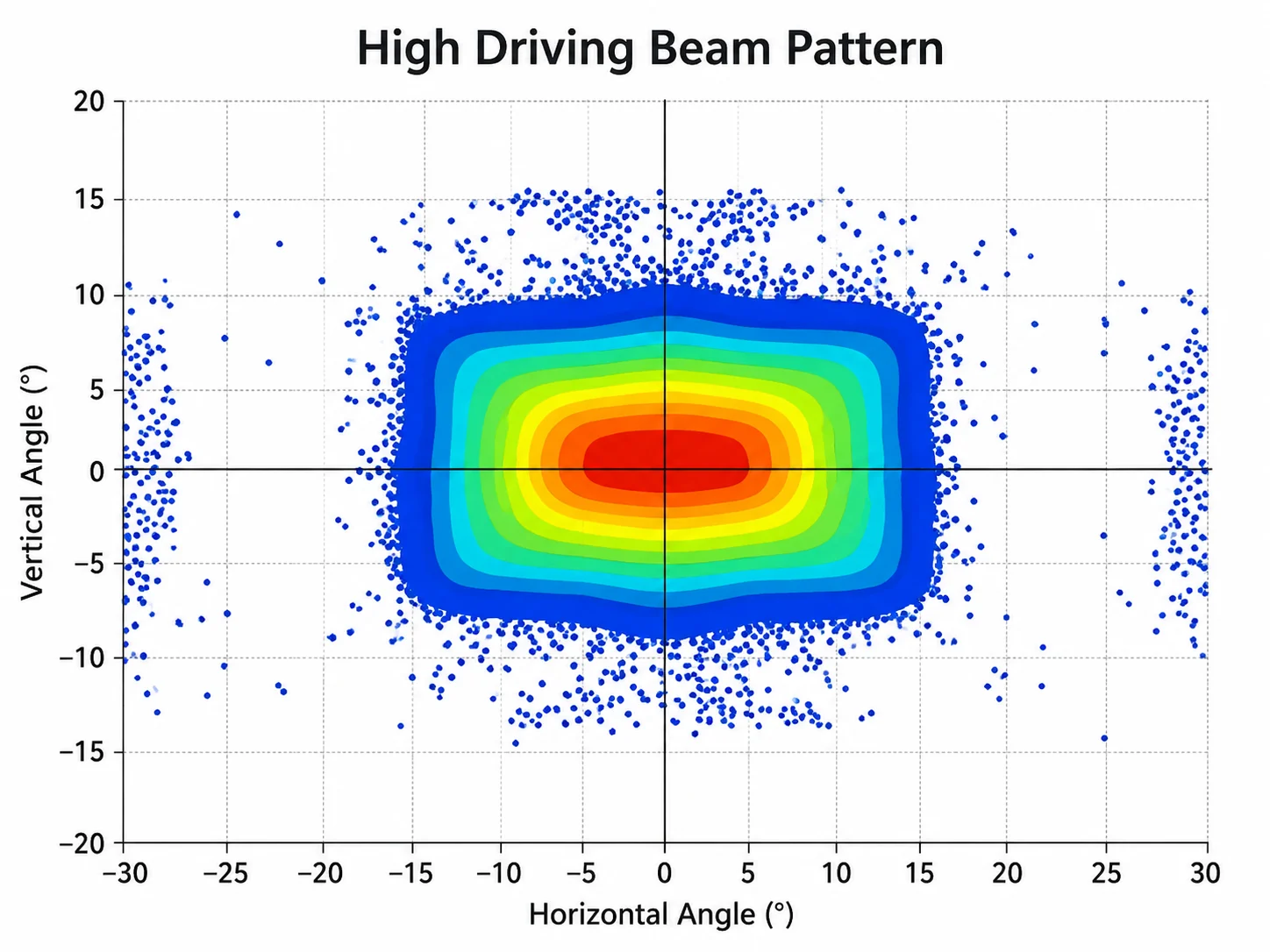
SAE J581 High Driving Pattern
SAE J581 is a lighting-performance standard associated with auxiliary upper-beam driving lamps.
The goal is controlled forward illumination rather than uncontrolled brightness.
The Special Lighting® CAVOK X8 High Driving configuration has been laboratory tested to the SAE J581 beam requirements.
Its optical system is designed to create strong long-range visibility while maintaining controlled light distribution.
CAVOK X8 High Driving Performance — Pair
- 99,000 candela
- 8,129 raw lumens
- 978 lux @ 10 meters
- 6000K white
- Laboratory tested SAE J581 beam
This demonstrates an important concept:
Candela becomes extremely important when evaluating distance.
Lumens describe the total amount of light generated.
Candela describes how intensely that light is projected in a particular direction.
For long-distance automotive lighting, high usable intensity is critical.
We will explore this in detail in our upcoming guide:
Candela vs Lumens vs Lux: What Actually Determines Lighting Performance?
Combo Beam
Distance Meets Coverage
A Combo beam attempts to combine two different lighting objectives:
Long-range illumination + wide-area visibility.
The center portion of the optical system sends light farther down the road while other optical elements distribute illumination toward the sides.
The result is a much larger usable field of view.
Combo patterns work particularly well in environments where the driver needs to see both:
what is far ahead and what is happening around the vehicle.
This makes them extremely versatile.
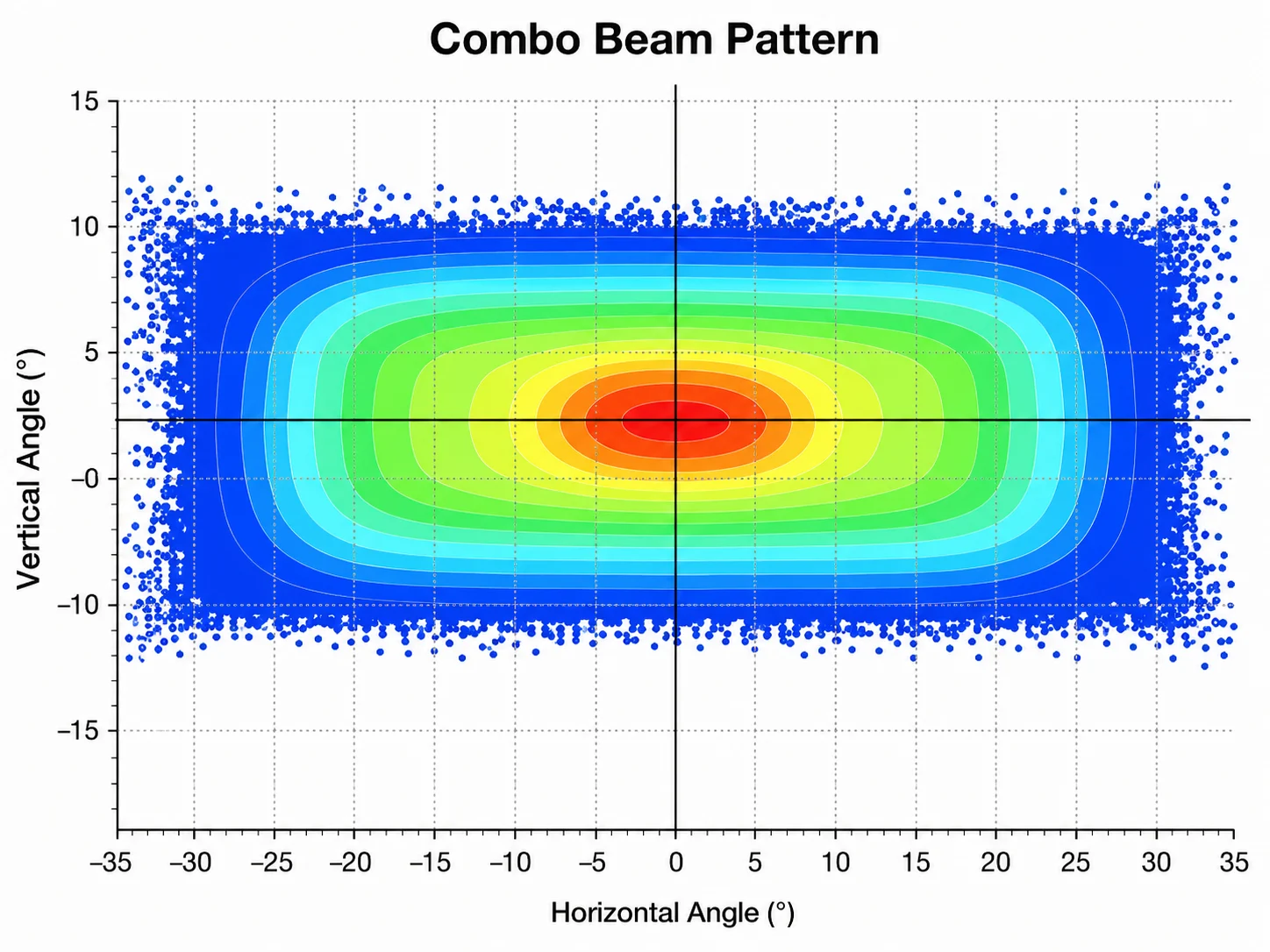
Where Combo Beams Work Best
Combo lighting is particularly useful for:
- off-road trails
- overlanding
- recreational vehicles
- mountain roads
- forest roads
- low-speed technical terrain
- mixed road and trail environments
For many drivers, it is the most versatile auxiliary-lighting configuration
CAVOK X8 Combo Beam
The CAVOK X8 is also available with a dedicated Combo optical configuration.
CAVOK X8 Combo Performance — Pair
- 46,750 candela
- 8,050 raw lumens
- 598 lux @ 10 meters
- 6000K white
Notice something important.
The raw lumen output is very similar to the High Driving version.
Yet the candela is significantly different.
That isn’t necessarily a loss of performance.
The light is simply being distributed differently.
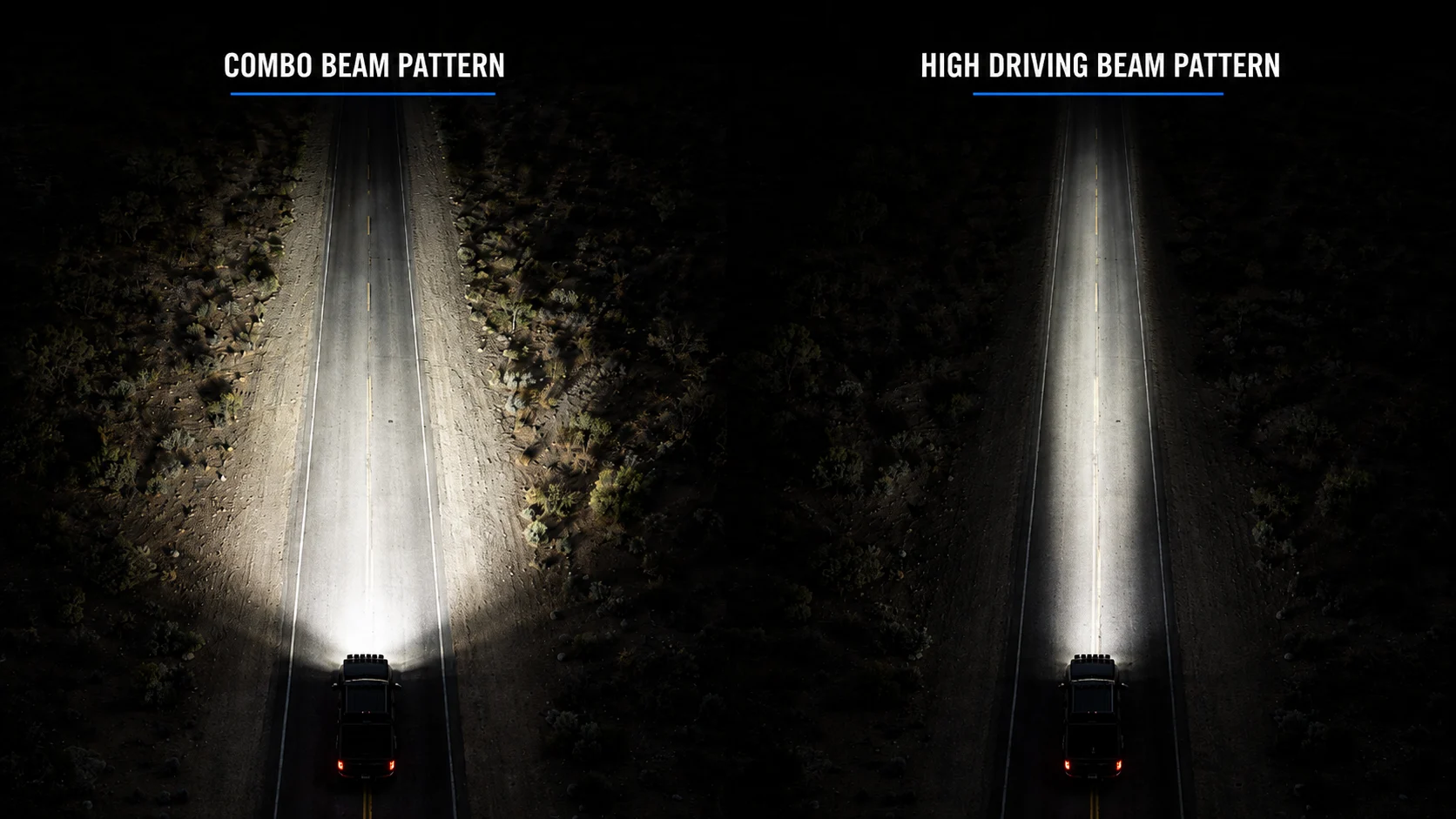
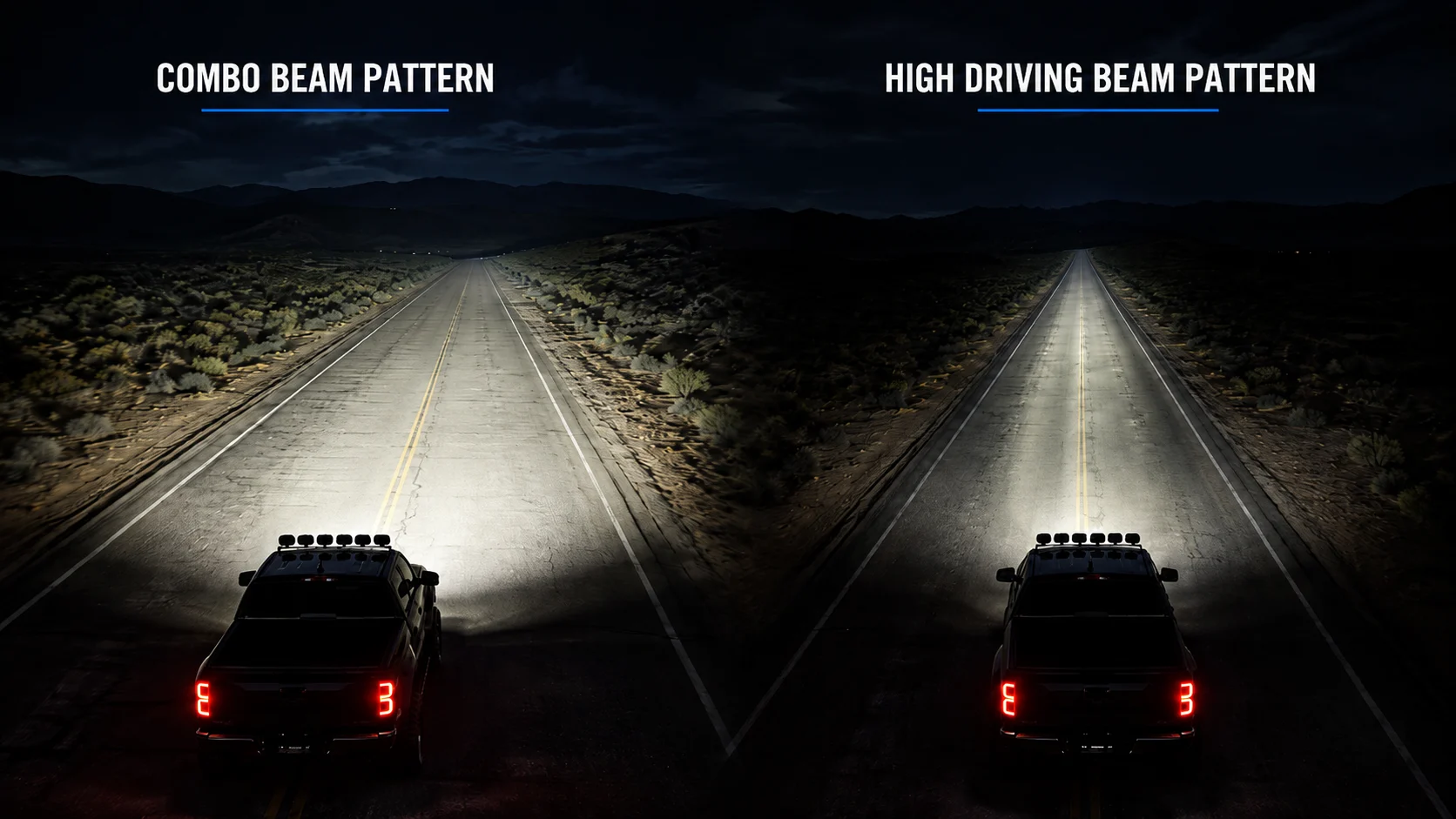
The Driving beam concentrates more optical intensity toward the distance.
The Combo beam distributes more of its available output across a wider field.
This is one reason why lumen figures alone cannot describe automotive lighting performance.
Driving Beam vs Combo Beam
This is one of the most important decisions when choosing auxiliary lighting.
Choose High Driving when:
Your priority is: maximum distance.
Examples include faster nighttime driving, long rural roads or situations where identifying objects far ahead is more important than illuminating everything beside the vehicle.
Choose Combo when:
Your priority is: distance + peripheral visibility.
You sacrifice some peak forward intensity in exchange for considerably more surrounding illumination.
For many off-road vehicles, this creates the most useful overall beam.
Flood Beam
Maximum Area Illumination
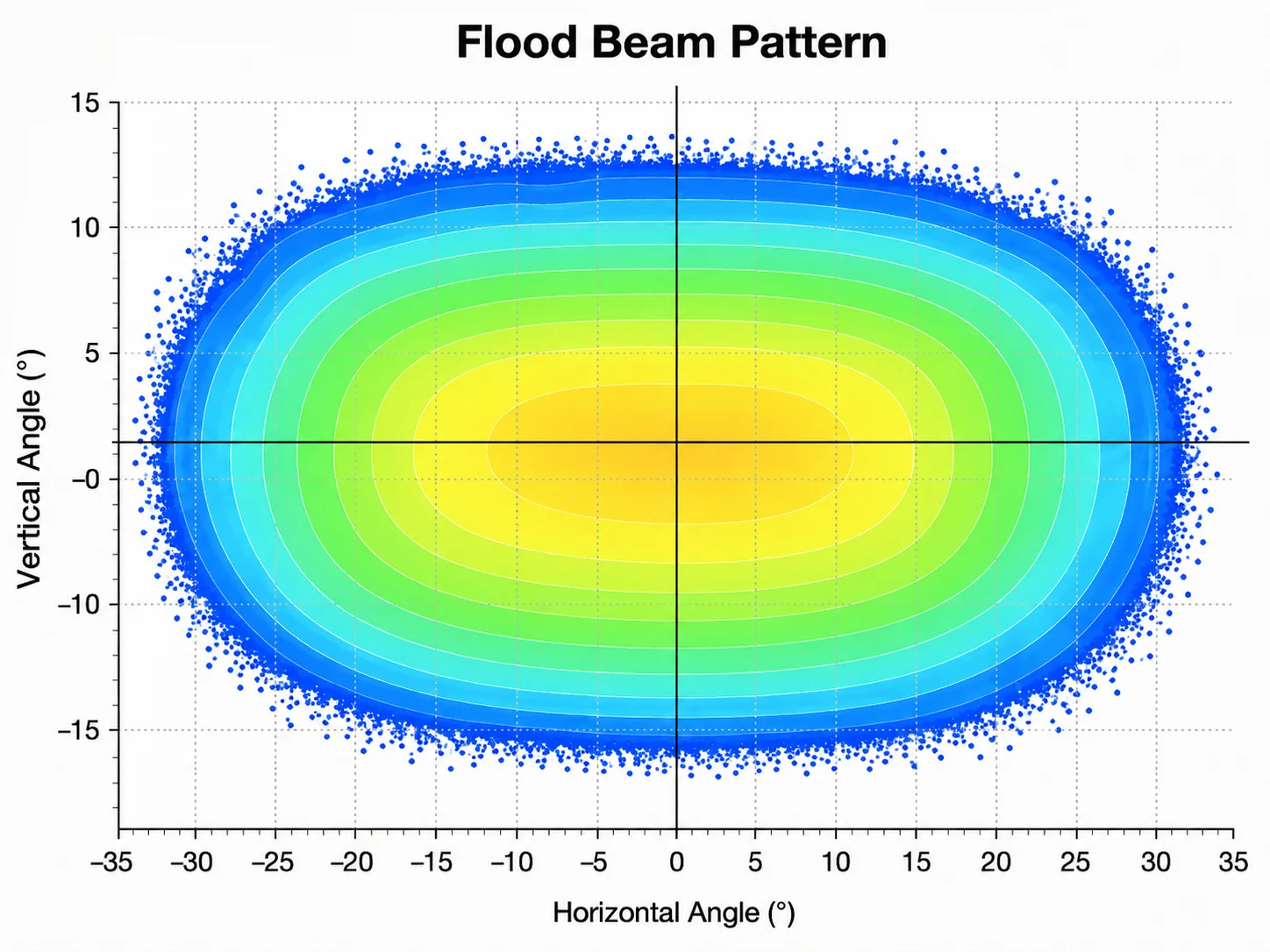
Flood optics spread light across a much wider area.
Instead of prioritizing distance, they prioritize nearby visibility.
The beam is shorter but substantially broader.
Flood patterns can be useful for:
- work lighting
- campsite illumination
- rock crawling
- reverse lighting
- side lighting
- low-speed off-road driving
Flood beams are particularly effective when vehicle speed is low and understanding the immediate surroundings is more important than seeing hundreds of meters ahead.
SAE J583 Fog Beam
Wide, Low and Controlled
Fog lighting solves a completely different problem.
When light hits fog, rain, dust or snow, excessive upward illumination can reflect back toward the driver.
This reduces visibility.
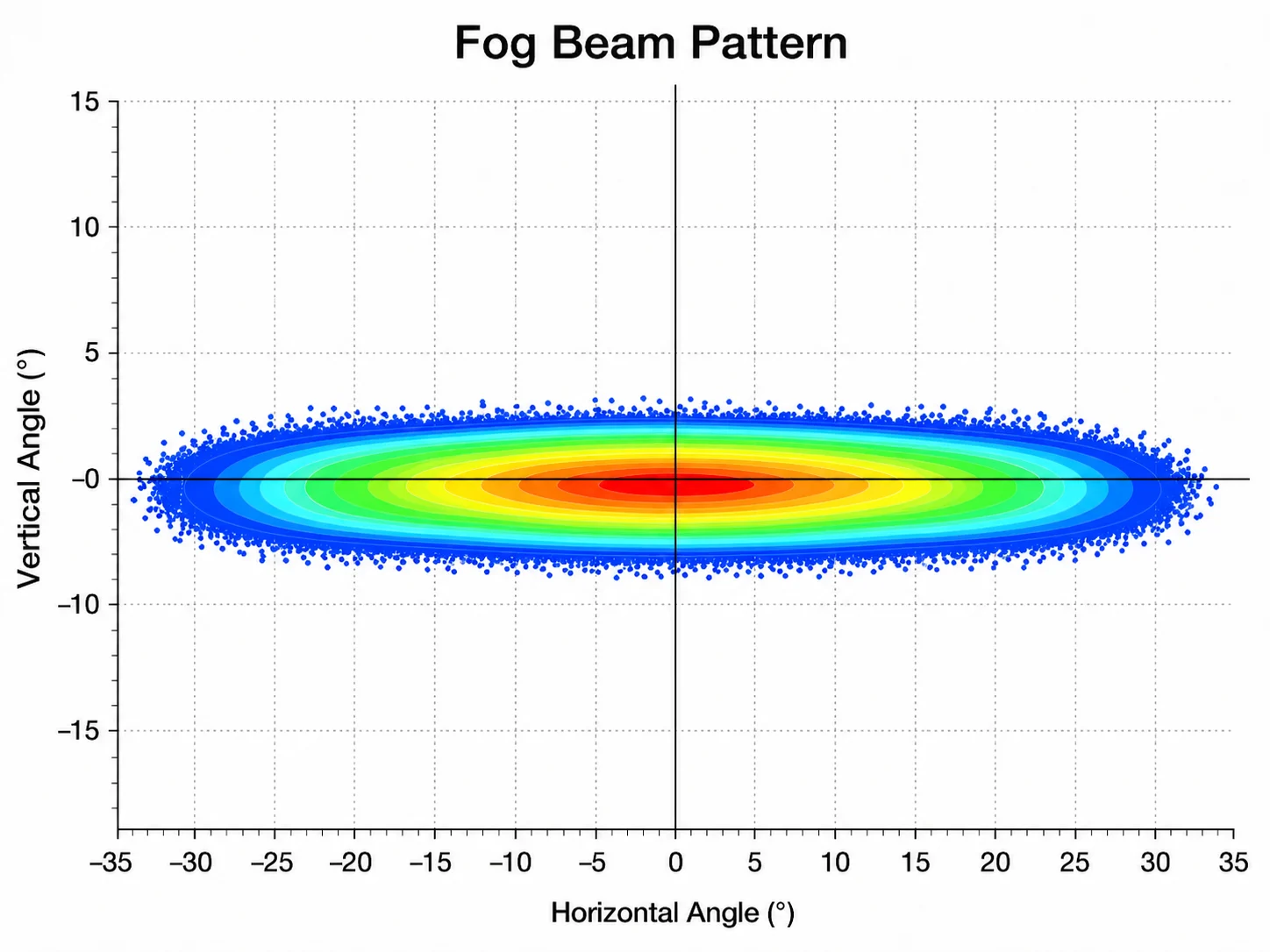
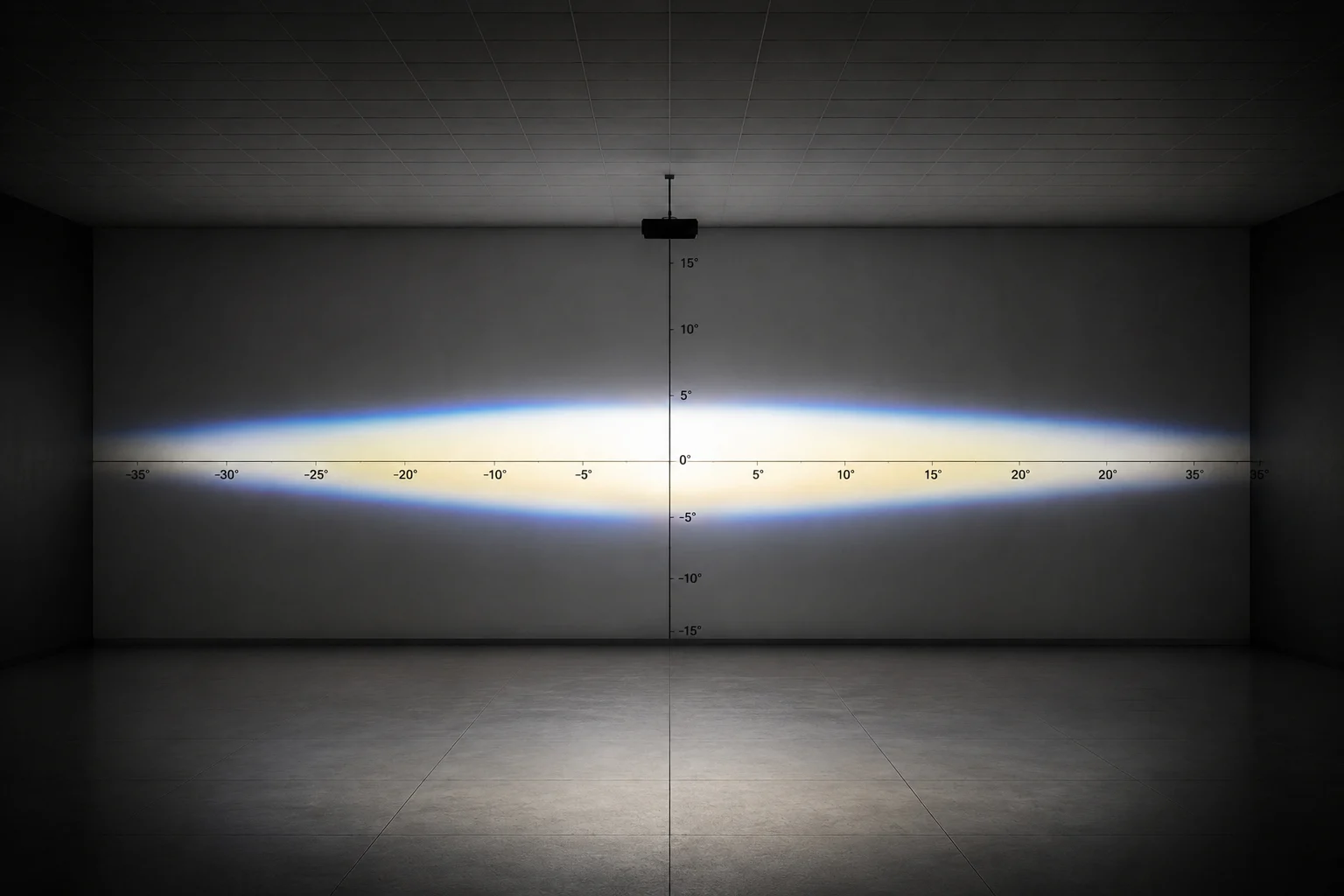
A properly designed fog beam therefore uses a wide and relatively low pattern with controlled vertical distribution.
Instead of trying to illuminate far into the distance, the objective is to illuminate the road surface and surrounding area directly ahead of the vehicle.
Why Fog Lights Need a Defined Cutoff
A well-engineered fog pattern should control the amount of light projected upward.
This helps reduce:
- glare
- backscatter
- unnecessary upward light
- discomfort for approaching drivers
The useful illumination remains concentrated near the road.
That produces a wide visual field while maintaining control over the beam.
Special Lighting XS Elite Fog Beam
The XS Elite 2-inch LED Fog Light uses a compact projector-style optical system designed around a wide fog pattern.
Its current configuration delivers:
- 22,000 raw lumens per pair
- 40 W each
- 6000K white
- 12 V
- IP69K protection
- 2-inch format
Its compact format also allows compatibility with several Toyota factory fog-light locations.
Applications include models such as:
- Toyota Land Cruiser 300
- Toyota Yaris Cross
- Toyota Corolla Cross
- Toyota Fortuner
- Toyota Hilux
- Toyota Corolla
- Toyota Land Cruiser Prado
Vehicle compatibility should always be confirmed according to model year and factory mounting configuration before installation.
Engineered Optics. Purpose-Built Performance.
Automotive lighting should be treated as an optical system.
LED selection matters, power matters, thermal management matters.
But the optics ultimately determine whether that energy becomes useful visibility.
At Special Lighting®, our approach is to combine high-performance LEDs with engineered optical systems designed around specific driving environments.
Because the best automotive light isn’t necessarily the one producing the highest number on a specification sheet.
It’s the one that puts light exactly where the driver needs it.
FAQ
What is the best beam pattern for off-road driving?
For general off-road use, a Combo beam is often the most versatile because it combines long-distance center illumination with wider peripheral coverage.
Is a spot beam better than a combo beam?
Not necessarily. A concentrated beam provides greater distance, while a Combo beam provides a broader field of vision. The best option depends on the driving environment.
What does SAE J581 mean?
SAE J581 defines performance requirements associated with auxiliary upper-beam driving lamps, including controlled optical distribution.
Are more lumens always better?
No. Lumens measure total output but do not indicate where the light is projected. Candela, lux and beam distribution are also important when evaluating automotive lighting.
What beam pattern is best for fog?
A dedicated fog pattern with wide horizontal illumination and controlled vertical output is generally preferred because it reduces unnecessary upward light and glare.